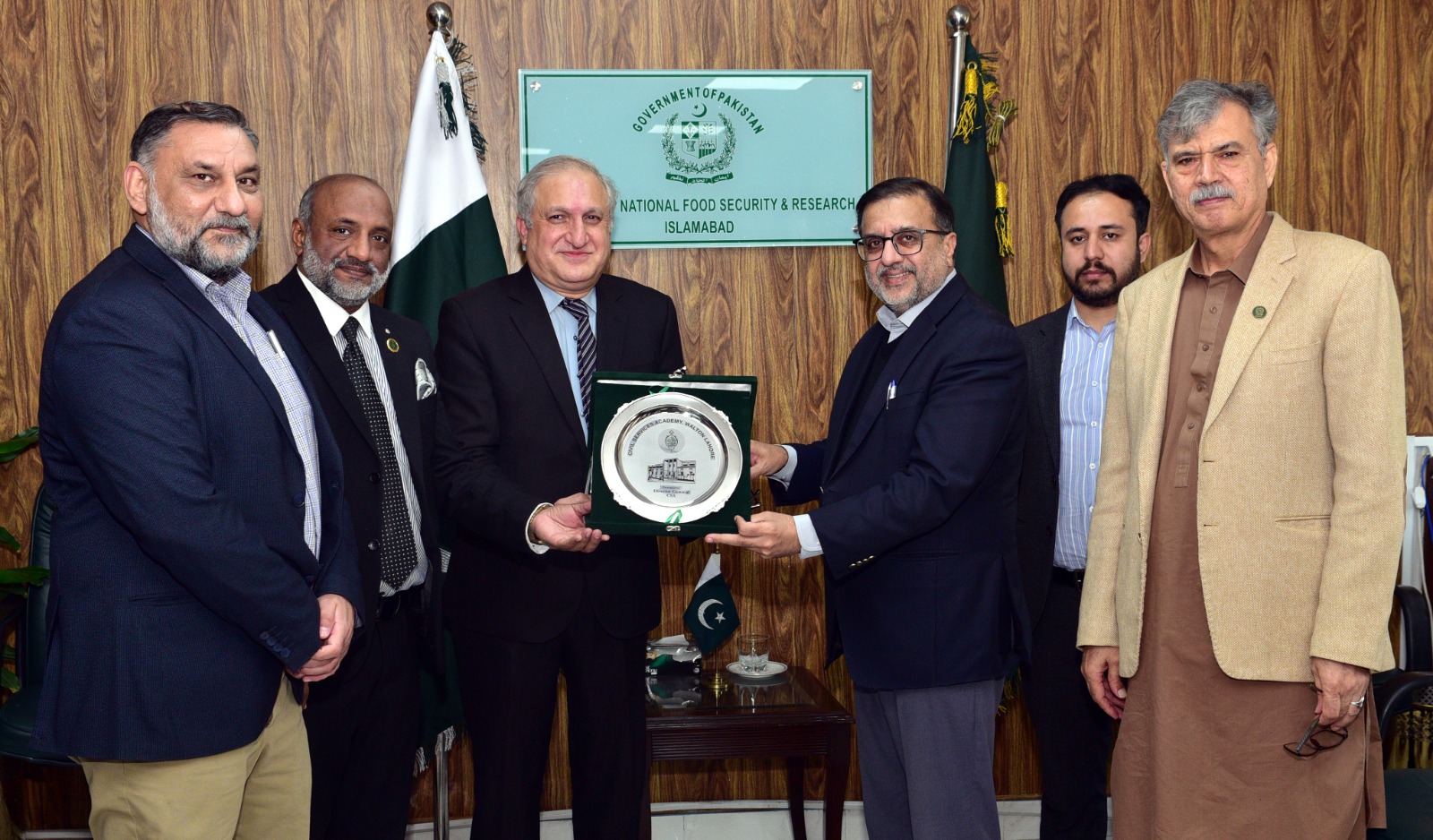
PARC and Civil Services Academy Sign Memorandum of Understanding to Enhance Training on Climate and Food Security
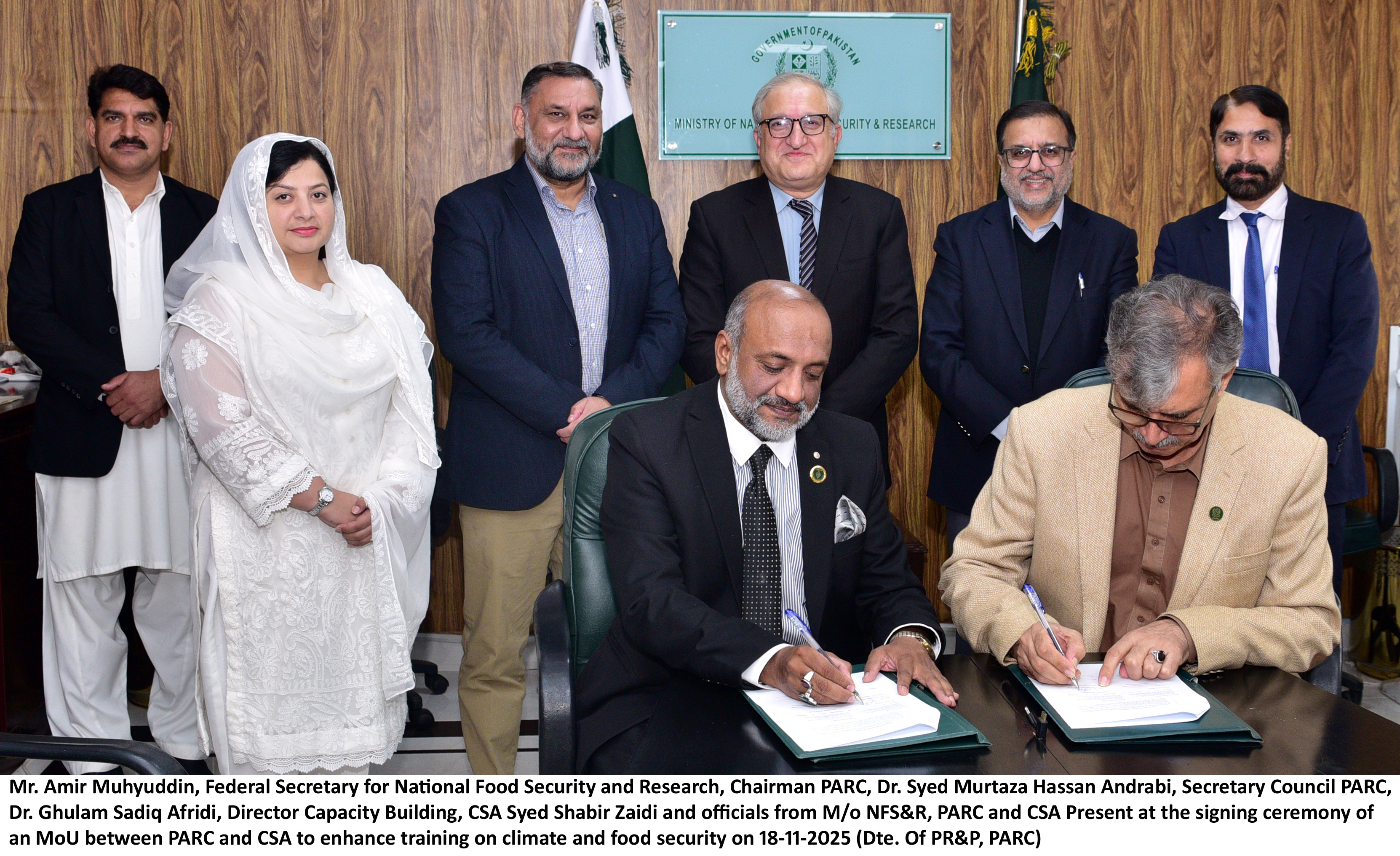
Pakistan Agricultural Research Council (PARC) has signed a Memorandum of Understanding with Pakistan Civil Services Academy (CSA) to strengthen the training of civil servants in climate resilience, agricultural development, and national food security. This collaboration represents an important and relatively uncommon linkage between Pakistan’s leading civil service training institution and its primary scientific research organization. The MoU was signed at the Ministry of National Food Security & Research as part of URRAN Pakistan, a government-supported initiative designed to introduce more practical and field-oriented learning into civil service training. Under this agreement, PARC will offer technical expertise, access to research, and scientific learning materials to help integrate updated agricultural and environmental modules into CSA’s curriculum. These modules will be taught across all 12 occupational groups, with a particular focus on the Pakistan Administrative Service (PAS). Federal Secretary of National Food Security & Research, Mr. Amir Mohyuddin, in his remarks, underscored the strategic significance of integrating scientific expertise into Pakistan’s civil service training. He stated that strengthening the scientific and technical capacity of our future civil servants is indispensable for advancing national goals related to climate resilience and food security. Chairman PARC, Dr. Syed Murtaza Hassan Andrabi stated that this collaboration represents an important step toward ensuring that public policy is informed by rigorous evidence and contemporary research. He further affirmed PARC’s commitment to supporting the federal government in preparing civil servants to address the country’s emerging agricultural and environmental challenges. The partnership reflects the federal government’s growing awareness that Pakistan’s increasing environmental challenges, such as water scarcity, extreme weather, declining crop productivity, and unstable food markets, require civil servants who possess stronger technical and scientific knowledge than in the past. PARC and CSA will also jointly organize policy dialogues involving federal and provincial officials to reduce gaps within Pakistan’s complex governance system. PARC reaffirms its commitment to promoting evidence-based policymaking by equipping future civil servants with the scientific understanding needed to address Pakistan’s rapidly evolving agricultural and environmental issues..jpg)